
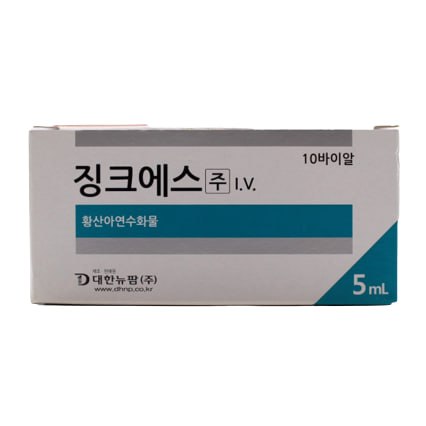
Zinc S Inj.
Zinc sulfate hydrate solution for intravenous use, added to parenteral nutrition solutions as a zinc supplement. Ten 5 ml vials per box.
Active ingredient
Zinc sulfate hydrate
Concentration
4.4 mg/ml (1 mg elemental zinc/ml)
Pack
10 vials × 5 ml
Administration
Intravenous, added to parenteral nutrition solutions

Contents06 sections
01 Overview
Zinc S Inj. is a solution of zinc sulfate hydrate for intravenous use, manufactured by Daehan New Pharm, South Korea. It supplies zinc, an essential trace element, to adults and children on parenteral nutrition when oral or enteral feeding is not possible or not sufficient. It is added to parenteral nutrition solutions rather than injected directly.
02 Key benefits
- Supplies zinc, an essential trace element
- Additive for parenteral nutrition solutions
- Label doses for adults, children and preterm infants
- Preservative-free solution
03 Application areas
- Total parenteral nutrition (TPN)
- Inadequate oral or enteral nutrition
- Acute catabolic states
- Small-intestinal fluid loss
- Parenteral nutrition in children and preterm infants
04 How to use
- Metabolically stable patients on TPN
- 2.5–4 mg zinc per day
- Acute catabolic state
- 4.5–6 mg zinc per day
04.1Method
- Use as prescribed, adjusting the dose with plasma trace-element levels as a guide.
- Inspect the solution for precipitate or discolouration before use.
- Add to the parenteral nutrition solution under laminar airflow to maintain sterility.
- Do not give undiluted by direct injection into a peripheral vein.
- Measure plasma zinc and copper at regular intervals.
04.2Zinc dose by patient group (Korean label)
| Patient group | Zinc dose |
|---|---|
| Metabolically stable patients on TPN | 2.5–4 mg/day |
| Acute catabolic state | 4.5–6 mg/day |
| Adults with small-intestinal fluid loss | Additional 12.2 mg per litre of fluid lost, or additional 17.1 mg per kg of output |
| Children aged 5 years and under | 100 µg/kg/day |
| Preterm infants weighing 3 kg or less | 300 µg/kg/day |
04.3Full protocol2 notes
- Zinc given without copper may lower plasma copper concentrations; use the zinc and copper levels to guide the next dose.
- Zinc is excreted through the small intestine and kidneys; allow for zinc retention in patients with impaired excretion.
05 Storage & handling
- Store in a sealed container at room temperature (1–30 °C), in a dry place.
- Keep in the original packaging.
- Discard any unused portion; the solution contains no preservative.
06 Frequently asked questions
Who may administer Zinc S Inj.?
Qualified medical professionals only, as an additive to parenteral nutrition solutions; it is not for self-administration. Koregen supplies Zinc S Inj. to clinics and distributors.
Can Zinc S Inj. be injected directly into a vein?
No. It is added to parenteral nutrition solutions. The Korean label warns that undiluted direct injection into a peripheral vein may cause phlebitis, and that bolus injection may increase renal zinc loss.
Can it be used in pregnancy or breastfeeding?
In pregnancy, the Korean label advises use only when the expected therapeutic benefit outweighs the risk. Zinc crosses the placenta and is present in breast milk.
| Active ingredient | Zinc sulfate hydrate |
|---|---|
| Concentration | 4.4 mg/ml (1 mg elemental zinc/ml) |
| Pack | 10 vials × 5 ml |
| Administration | Intravenous, added to parenteral nutrition solutions |
| Appearance | Clear, colourless, odourless solution; colourless vials |
| Excipients | Sulfuric acid, water for injection |
| Shelf life | 24 months from manufacture |
| Manufacturer | Daehan New Pharm, South Korea |
Recommended Archive
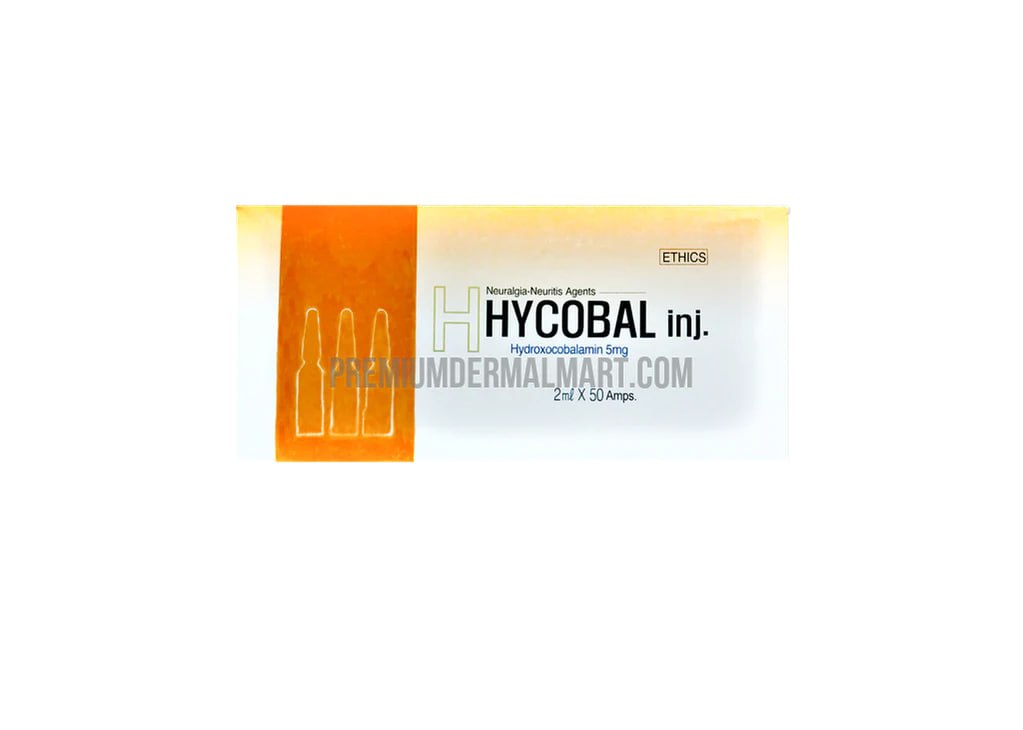
Hycobal Inj.
Hydroxocobalamin (vitamin B12) solution for intramuscular or intravenous injection, used to raise vitamin B12 levels. Fifty 2 ml…
101$
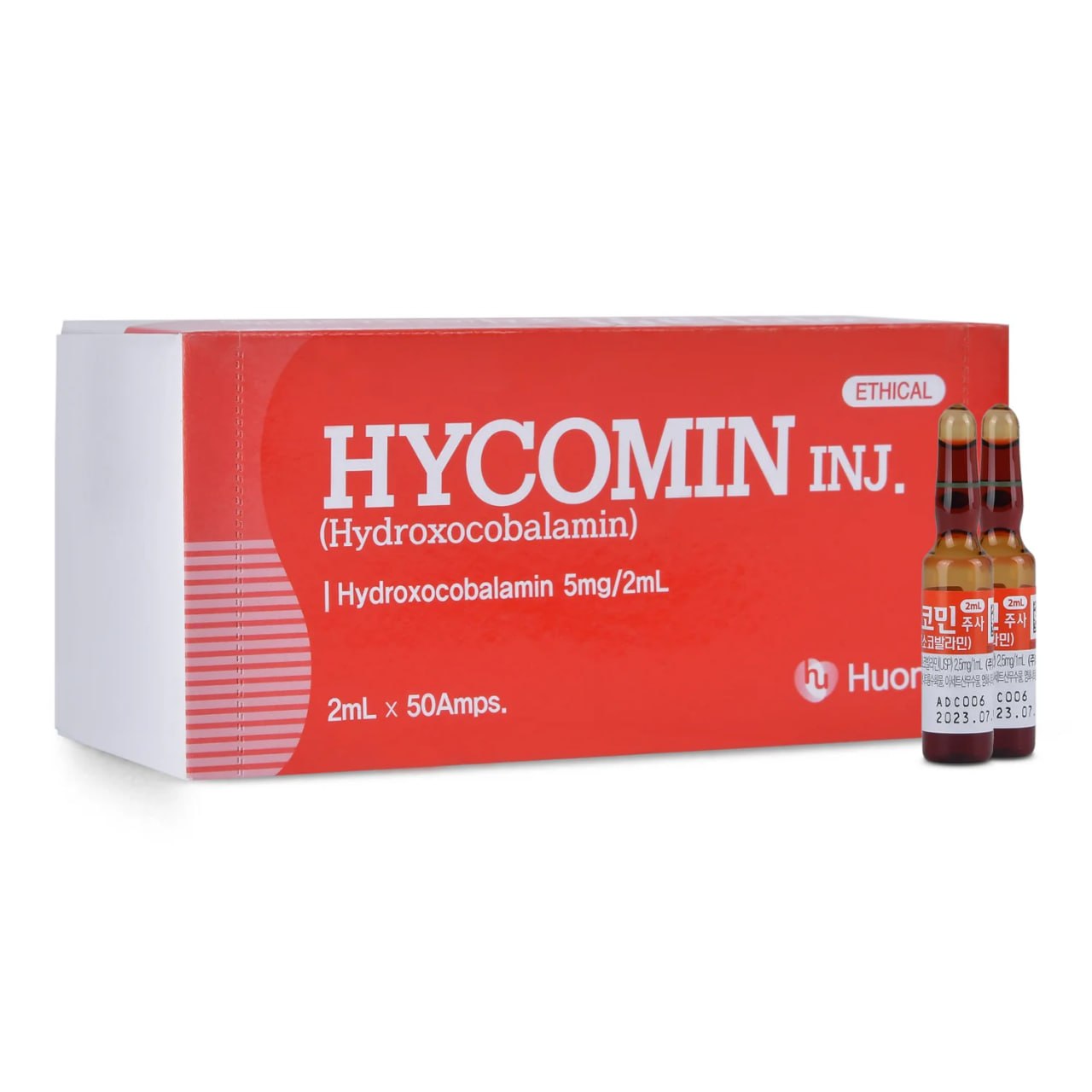
Hycomin Inj.
Hydroxocobalamin (vitamin B12) solution for intramuscular or intravenous injection, used to raise vitamin B12 levels. Fifty 2 ml…
76$
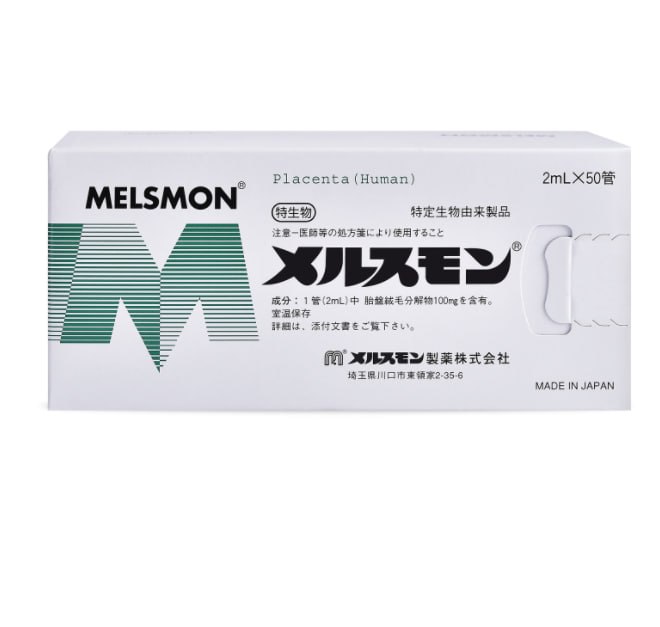
Melsmon Inj.
Human placenta extract for subcutaneous injection, made in Japan and used to improve menopausal symptoms. Fifty 2 ml…
420$