
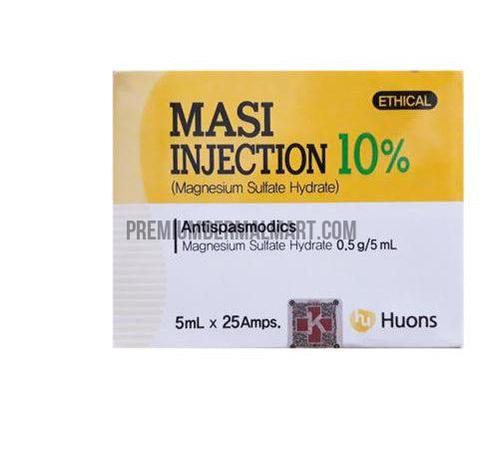
Masi Inj.
Magnesium sulfate hydrate solution for injection, used for hypomagnesaemic convulsions, eclamptic seizures and magnesium replacement. Twenty-five 5 ml ampoules per box.
Active ingredient
Magnesium sulfate hydrate
Strength
0.1 g/ml (10% solution)
Pack
25 ampoules × 5 ml
Administration
Intravenous injection or infusion; intramuscular injection

Contents06 sections
01 Overview
Masi Inj. is a prescription solution of magnesium sulfate hydrate for intravenous or intramuscular use, manufactured by Huons, South Korea. It supplies magnesium directly and is classed as an antispasmodic. Its Korean label lists convulsions due to hypomagnesaemia, eclamptic seizures, prevention of uterine tetany and electrolyte replacement in hypomagnesaemia.
02 Key benefits
- Supplies magnesium directly
- Classed as an antispasmodic
- Intravenous or intramuscular administration
- Solution for injection; no reconstitution required
03 Application areas
- Convulsions due to hypomagnesaemia
- Eclamptic seizures
- Prevention of uterine tetany
- Electrolyte replacement in hypomagnesaemia
04 How to use
- Maximum concentration, IV alone
- 10%
- Older patients
- Slower rate, reduced dose
- Paediatric use
- Not tested (Korean label)
04.1Method
- Cut the ampoule carefully to minimise glass fragments in the solution.
- For intravenous injection given alone, use a concentration of 10% or less and inject slowly.
- Dilute before use for electrolyte replacement.
- Avoid mixing with sulfonamides, alkali carbonates, bicarbonates, tartrates, soluble phosphates, or potassium or ammonium bromide.
- Monitor renal excretion when treating magnesium deficiency.
- Use immediately after opening; do not reuse any remaining solution.
04.2Adult doses on the Korean label
| Use | Dose | Route |
|---|---|---|
| Convulsions due to hypomagnesaemia | 1–2 g | Intravenous injection |
| Eclamptic seizures | 4–5 g over 10 minutes | Intravenous injection |
| Prevention of uterine tetany | 4 g initially; 1 g may follow | Intravenous injection |
| Electrolyte replacement | 1 g every 6 hours × 4 | Intramuscular injection |
| Electrolyte replacement (alternative) | 5 g in 5% glucose or 0.9% sodium chloride | Intravenous infusion over 3 hours |
04.3Full protocol4 notes
- In pregnancy, monitor the fetal heart rate; magnesium crosses the placenta, and use during labour can cause neonatal respiratory depression.
- Use for more than 5–7 days in pregnancy has been linked to fetal hypocalcaemia and skeletal effects; monitor neonatal calcium and magnesium after prolonged or repeated use.
- Not recommended during breastfeeding unless essential.
- Overdose signs by serum magnesium: 2.5–5 mmol/L, ECG changes; 3–5 mmol/L, depressed tendon reflexes; 5–7.5 mmol/L, respiratory depression; 10 mmol/L, cardiac arrest.
05 Storage & handling
- Store at 1–30 °C (room temperature).
- Store in a sealed container.
06 Frequently asked questions
Who may administer Masi Inj.?
Qualified medical professionals only, by intravenous or intramuscular injection; it is a prescription medicine. Koregen supplies Masi Inj. to clinics and distributors.
What are the contraindications for Masi Inj.?
Renal impairment, coma, hypermagnesaemia, atrioventricular block (first to third degree) or other cardiac conduction disorders, and myasthenia. The label advises caution in heart disease and in children with intestinal parasites.
What adverse reactions are listed for Masi Inj.?
Vomiting, dry mouth, flushing with rapid infusion, headache, tremor, tingling and warmth at the injection site; very rarely conduction disorders or bradycardia. High doses can cause magnesium toxicity, including hypotension, CNS depression and respiratory paralysis.
How is a magnesium overdose managed?
Reduce the dose or stop treatment, and give 10 ml of 10% calcium gluconate injection slowly intravenously as the antidote.
Which drug interactions does the label list?
Barbiturates, narcotics, other hypnotics and general anaesthetics: increased CNS depression, contraindicated in combination. Muscle relaxants increase magnesium's neuromuscular effect. Absorption of iron, aminoglycoside antibiotics (the label gives tetracycline as an example) and sodium fluoride may fall.
| Active ingredient | Magnesium sulfate hydrate |
|---|---|
| Strength | 0.1 g/ml (10% solution) |
| Pack | 25 ampoules × 5 ml |
| Administration | Intravenous injection or infusion; intramuscular injection |
| Therapeutic class | Antispasmodic |
| Appearance | Colourless solution; colourless ampoules |
| Shelf life | 36 months from manufacture |
| Manufacturer | Huons, South Korea |
Recommended Archive
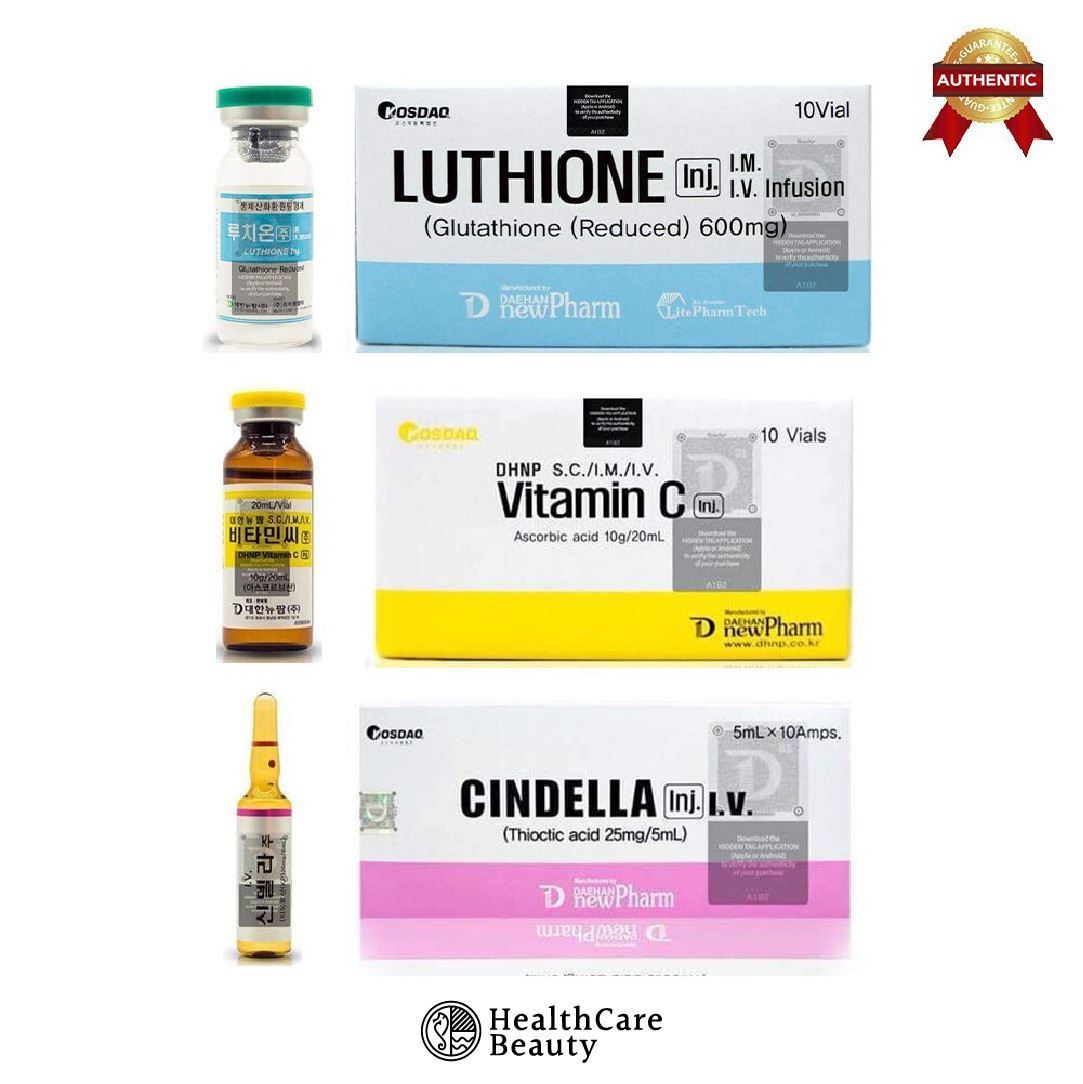
Cindella Set 600mg
Set of three Daehan New Pharm injectables: Luthione 600mg (glutathione), Cindella Inj. (thioctic acid) and Vitamin C Inj.…
108$
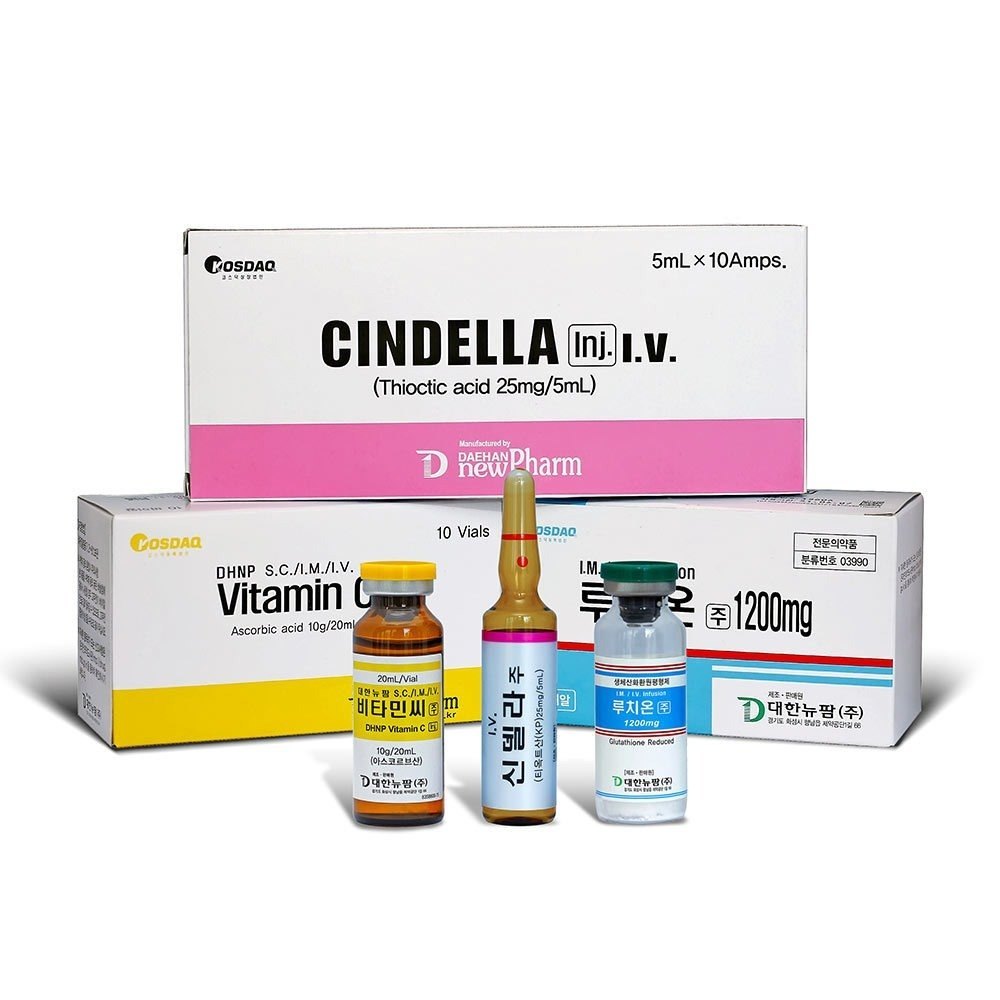
Cindella Set 1200mg
Set of three Daehan New Pharm injectables: Luthione 1200mg (glutathione), Cindella Inj. (thioctic acid) and Vitamin C Inj.…
144$
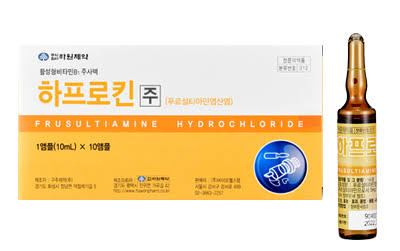
Haprokin Inj.
Fursultiamine hydrochloride (vitamin B1) solution for injection, used to prevent and treat vitamin B1 deficiency. Ten 10 ml…